 Lyophilisate in a glass vial

Neuroendocrine peptides
12 products from €21.99
Peptides at the interface of the nervous and endocrine systems, including releasing hormones and their analogues. In the lab they are used to study receptors and hormonal signalling cascades.
Lyophilisate in a glass vial Lyophilisate in a glass vial
 Lyophilisate in a glass vial
 Spray bottle
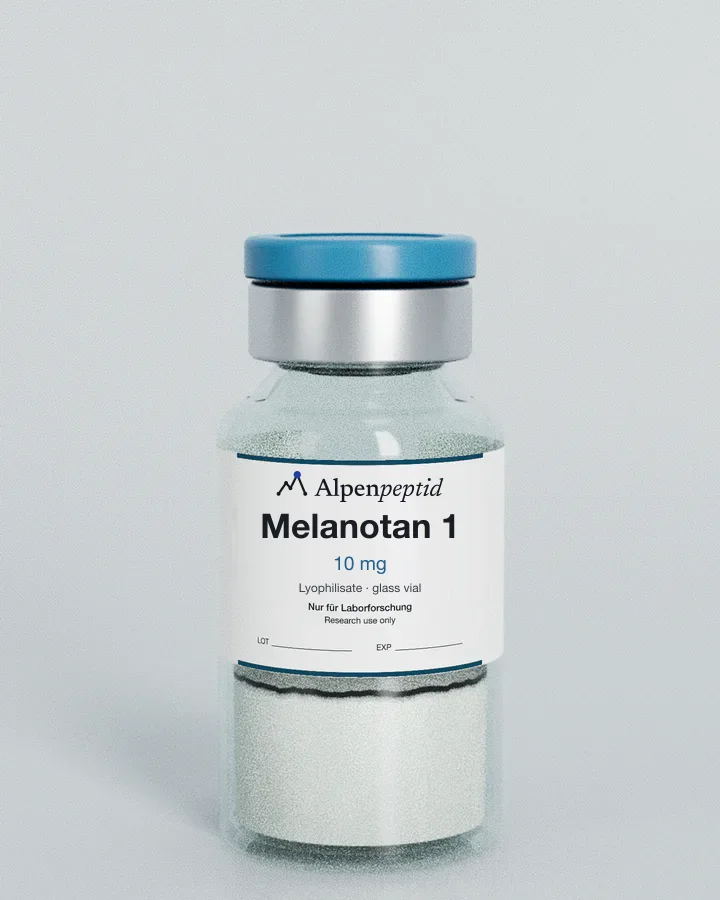 Lyophilisate in a glass vial
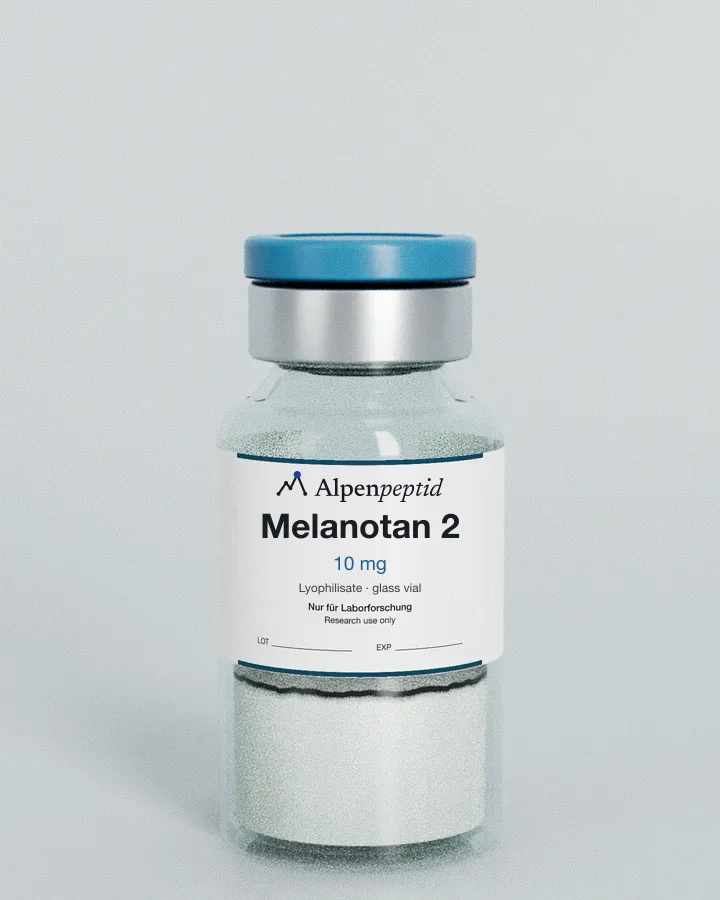 Lyophilisate in a glass vial
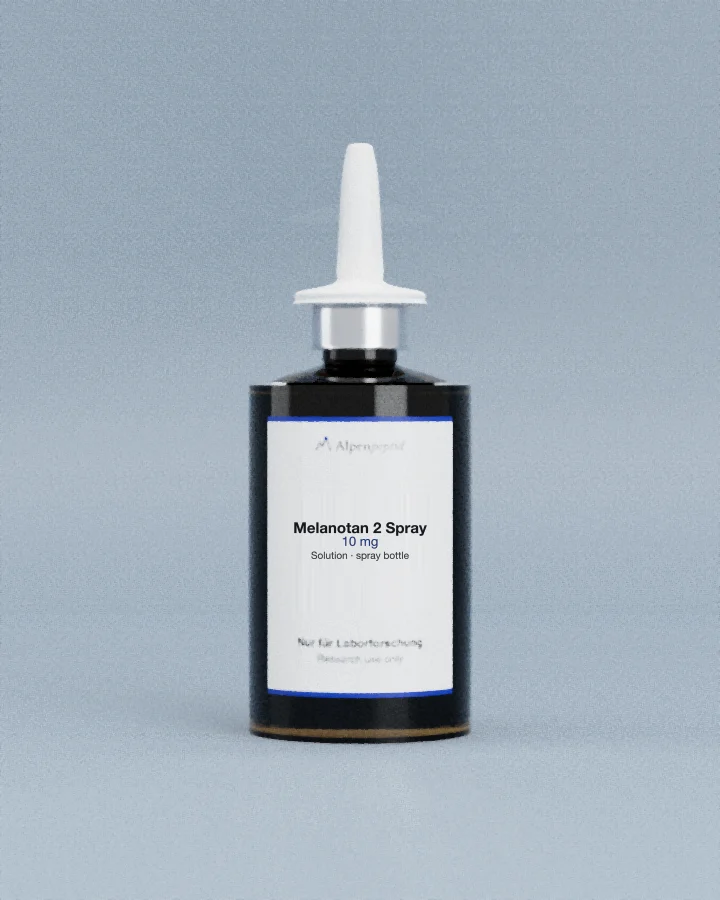 Spray bottle
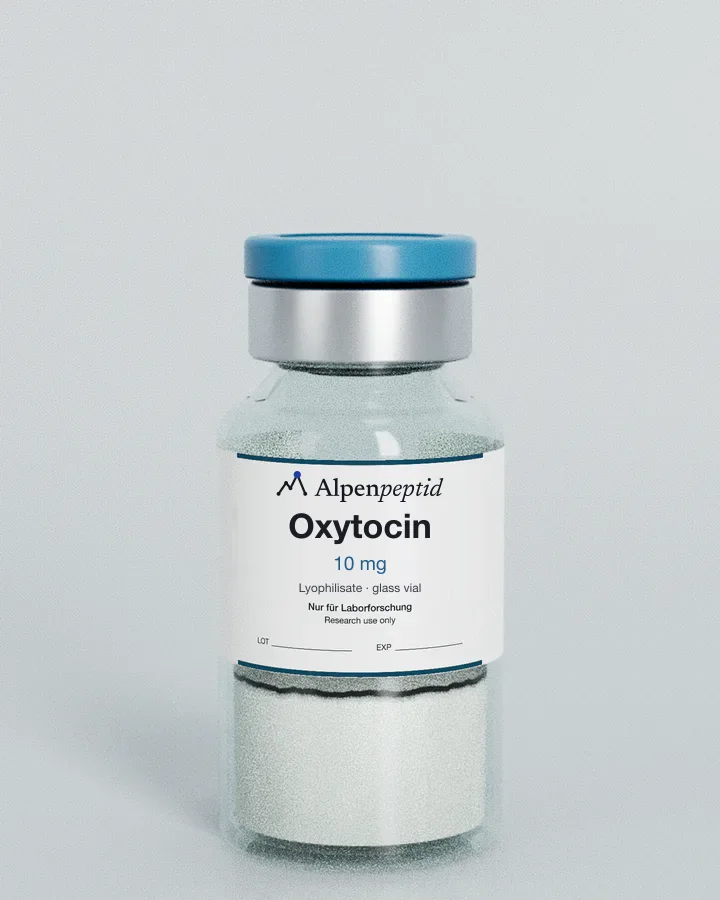 Lyophilisate in a glass vial
 Spray bottle
 Lyophilisate in a glass vial
 Spray bottle
 Lyophilisate in a glass vial
About Neuroendocrine peptides
Neuroendocrine peptides sit at the interface of the nervous and hormonal systems. The releasing hormones and their analogues include TRH, a tripeptide, and alarelin, an analogue of GnRH. Kisspeptin-10 is the C-terminal section of ten amino acids of kisspeptin. ACTH 1-39 is the full adrenocorticotropic hormone of 39 amino acids, and oxytocin is a nonapeptide with a disulphide bridge.
The melanocortin analogues form a group of their own. Melanotan 1 is a linear analogue of α-MSH with 13 amino acids. Melanotan 2 and PT-141 are shorter, cyclic peptides. The ring makes them more stable against proteases, but it also changes how they behave in solution.
For lab work: peptides with a disulphide bridge or a ring must not be treated with reducing agents, or the structure is lost. Longer peptides such as ACTH 1-39 are more prone to aggregation. Several products are available as a solution in a spray bottle as well as a lyophilisate.
Comparisons and further reading
- Peptide Nomenclature Explained: Why the Same Substance Has Several Names
- Storing peptides: fridge, freezer and lyophilisate
Common questions
What is the difference between Melanotan 1 and Melanotan 2?
Melanotan 1 is a linear peptide of 13 amino acids, Melanotan 2 a shorter, cyclic peptide. Mass, structure and stability differ clearly.
Why are there spray bottles?
We offer some substances as a solution as well. The substance is the same; form, amount and storage differ. Both are on the product page.
Which peptides contain a disulphide bridge?
In this research area, oxytocin for example. Such peptides should not come into contact with reducing agents like DTT or TCEP if the native structure is to be kept.
For laboratory research use only. Not for use in humans or animals.